About Us
GoggleWorks Center for the Arts transforms lives through unique interactions with art.
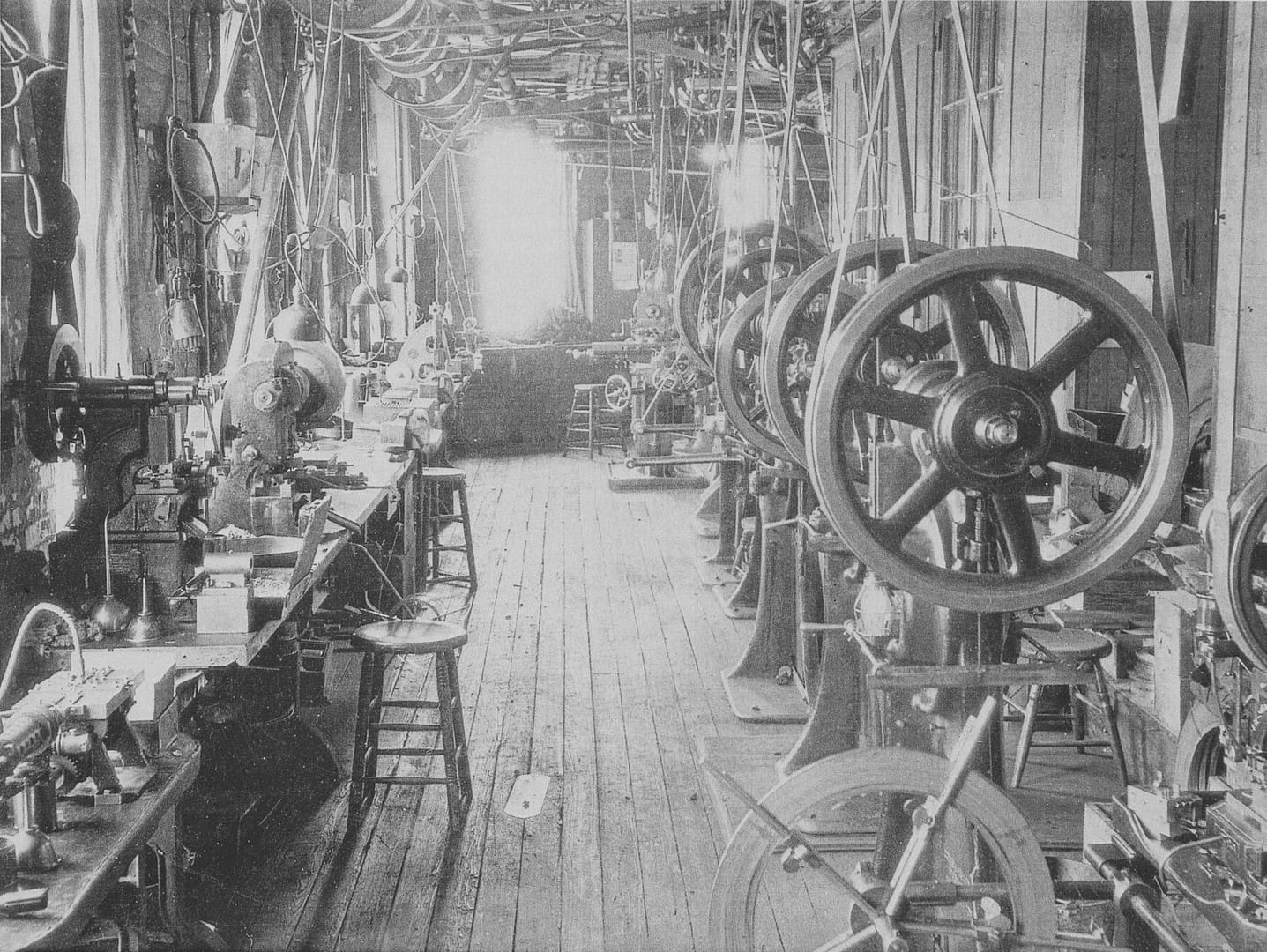
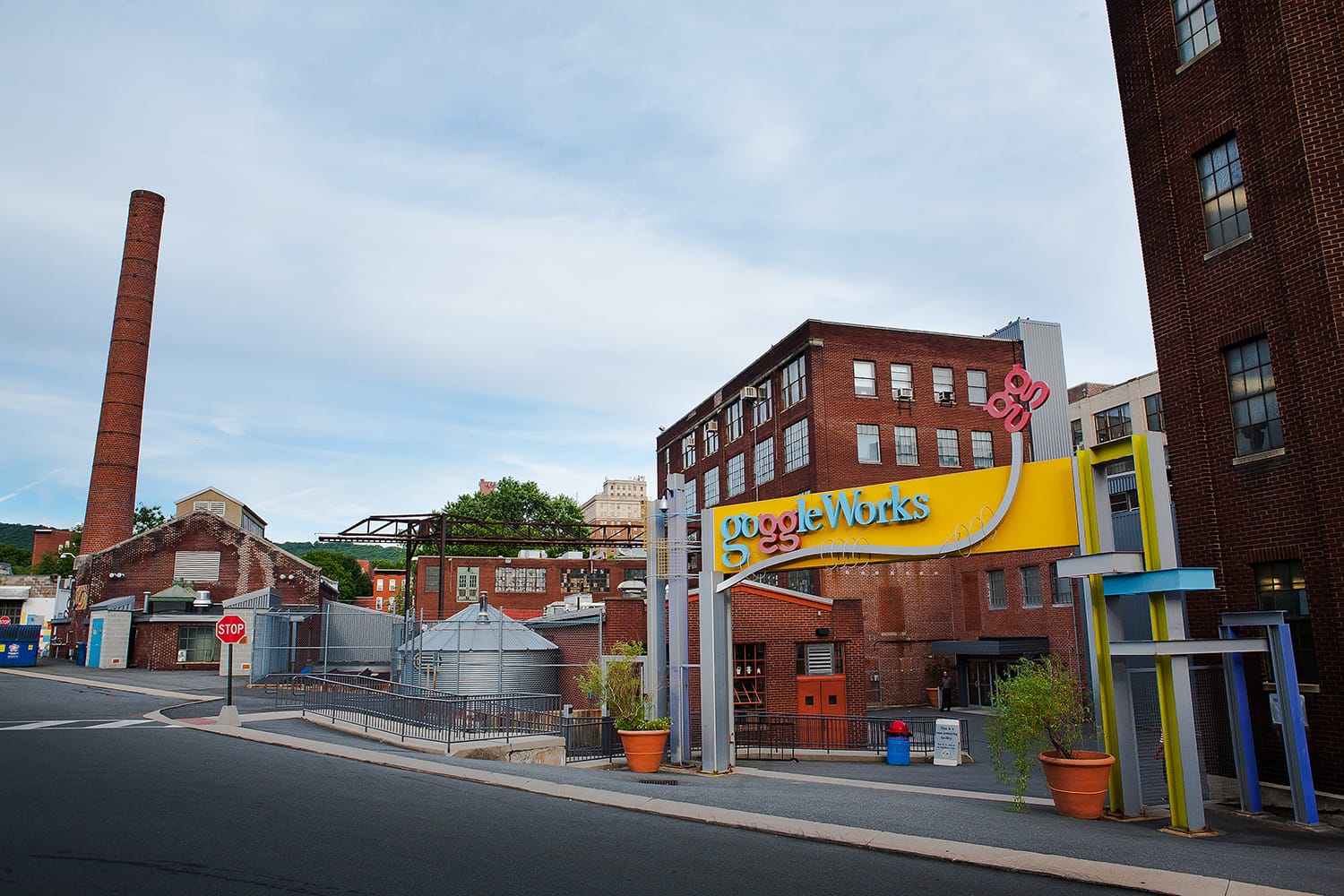
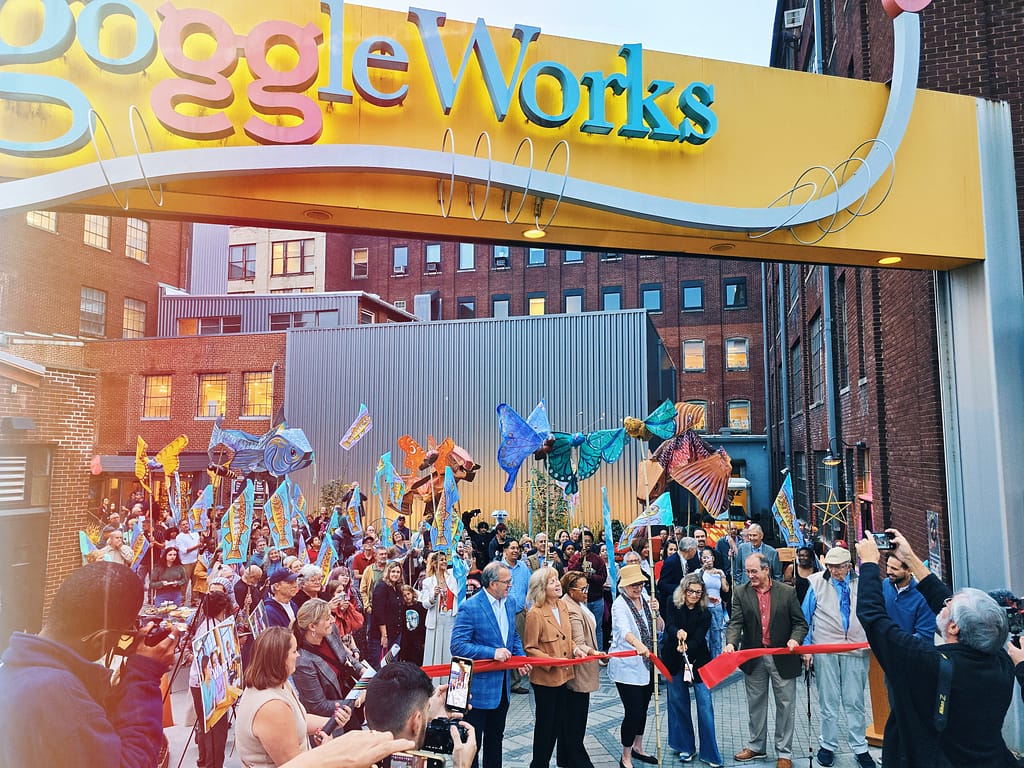
GoggleWorks is a nonprofit cultural campus headquartered in a former goggle factory (hence the name!) comprising nearly an entire city super-block bustling with the arts in downtown Reading, Pennsylvania. The brainchild of trustee Marlin Miller and the late co-founders Albert Boscov and Irv Cohen, alongside a founding group of other volunteers and artists, Goggleworks opened in 2005.
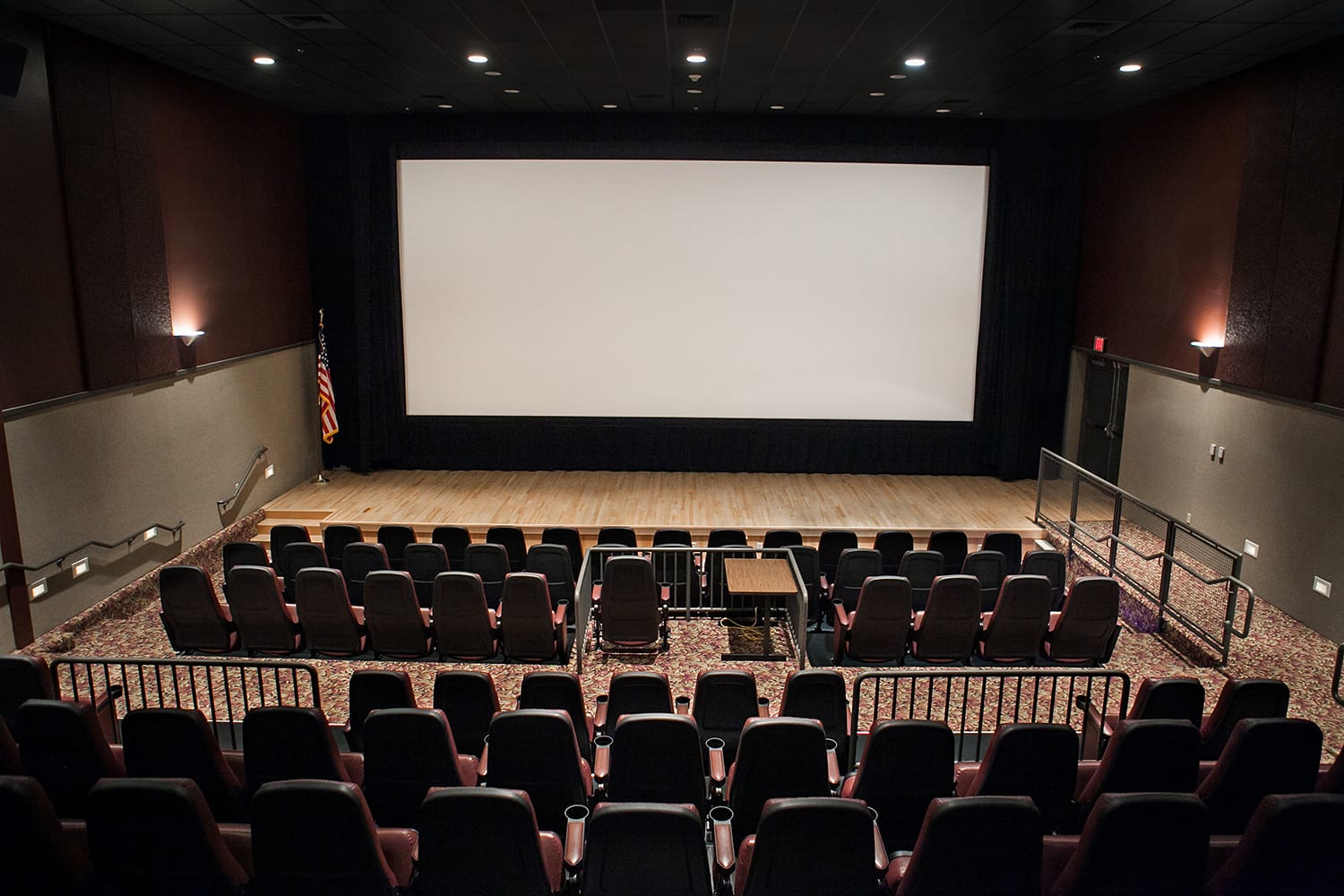
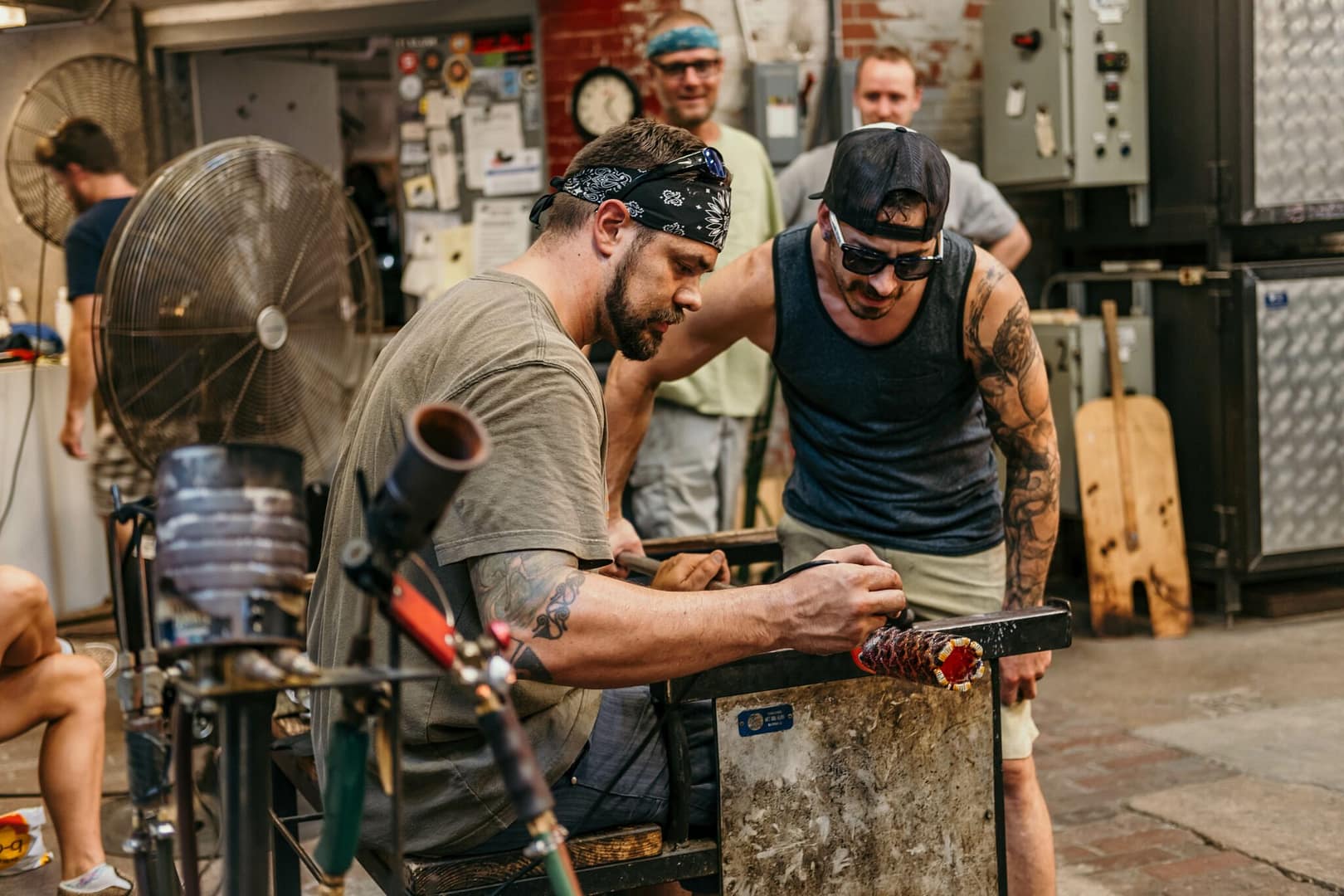
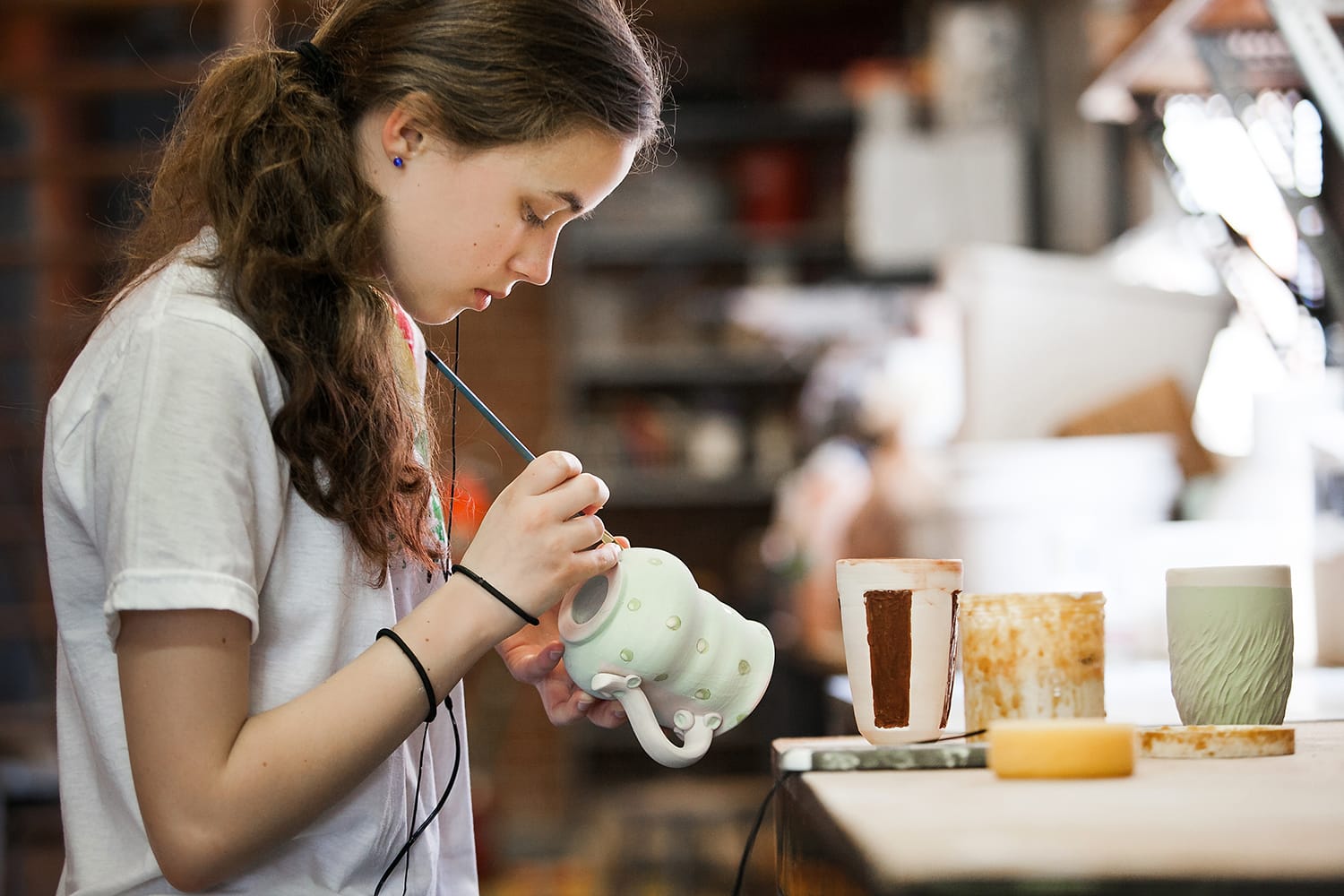
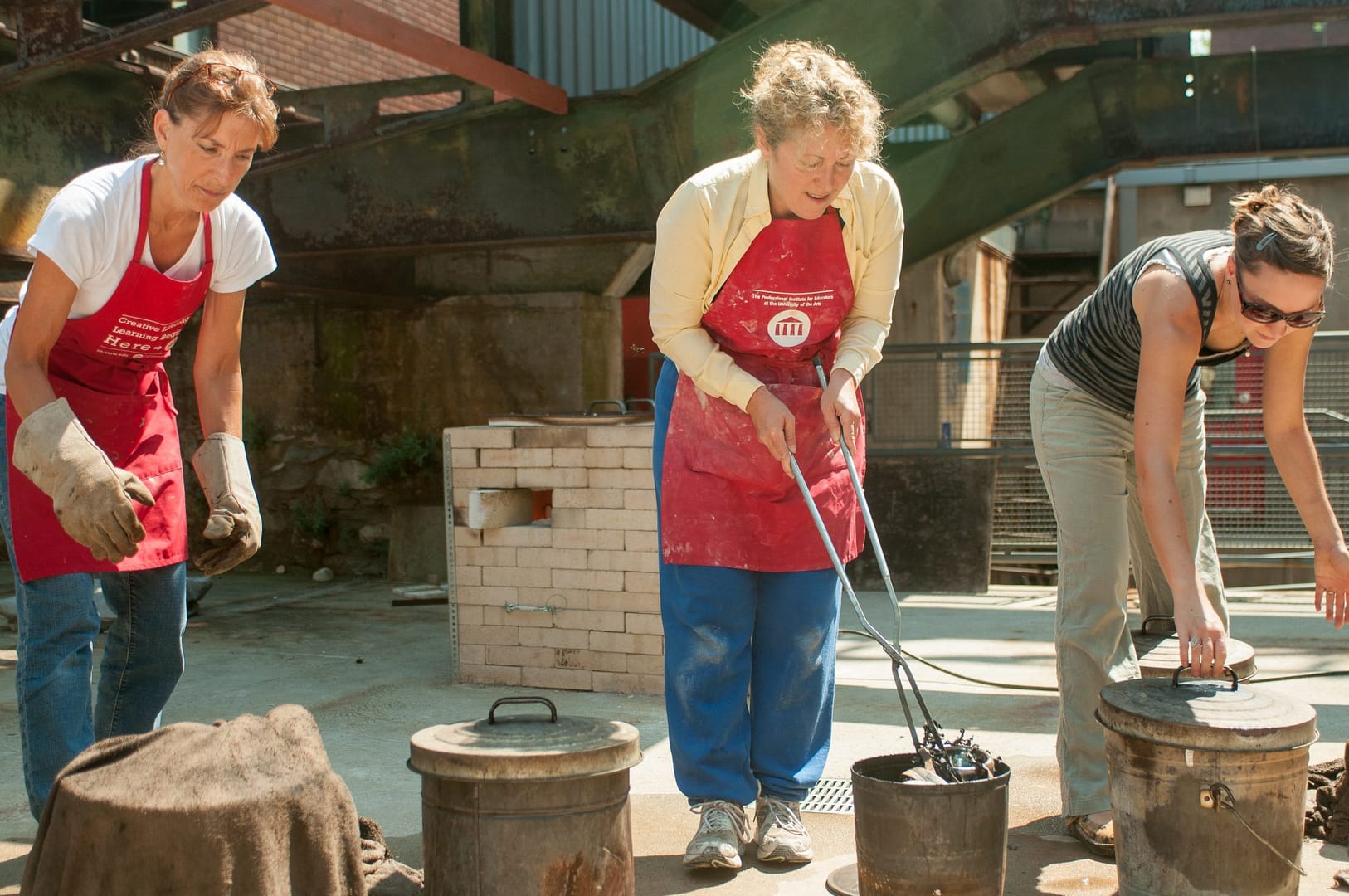
Today, GoggleWorks serves roughly 250,000 visitors and participants each year through arts education, including workshops, classes, and visiting artists; community outreach programs; a summer residency; youth programs and summer camps. Our campus boasts 35 on-site studio artists; the Albert and Eunice Boscov film theater; three premier galleries for exhibitions; the New Store, featuring handmade gifts and art from hundreds of local makers; a new Art Supply store for artists and students; the Berks Launchbox STEAM, co-working, and maker space; full restaurant and bar; and 16 communal learning environments including including ceramics; hot, warm, cold, and stained glass; jewelry and fine metals; heavy metals; photography; printmaking; drawing and painting; digital lab and virtual reality; STEAM makerspaces, woodworking; youth and teen classrooms; and urban gardens.
Admission and parking are free from 9am to 9pm daily.
GoggleWorks is a place to develop skills, ask questions, experiment freely, and investigate the human spirit. Through exceptional arts education and engaging community programming, we inspire people to expand the boundaries of art-making, personal growth, cross-cultural dialogue, and appreciation for material culture. Our programs are unique because they are Interactive, Place-Based, and Lifelong, falling into four basic categories.
Education
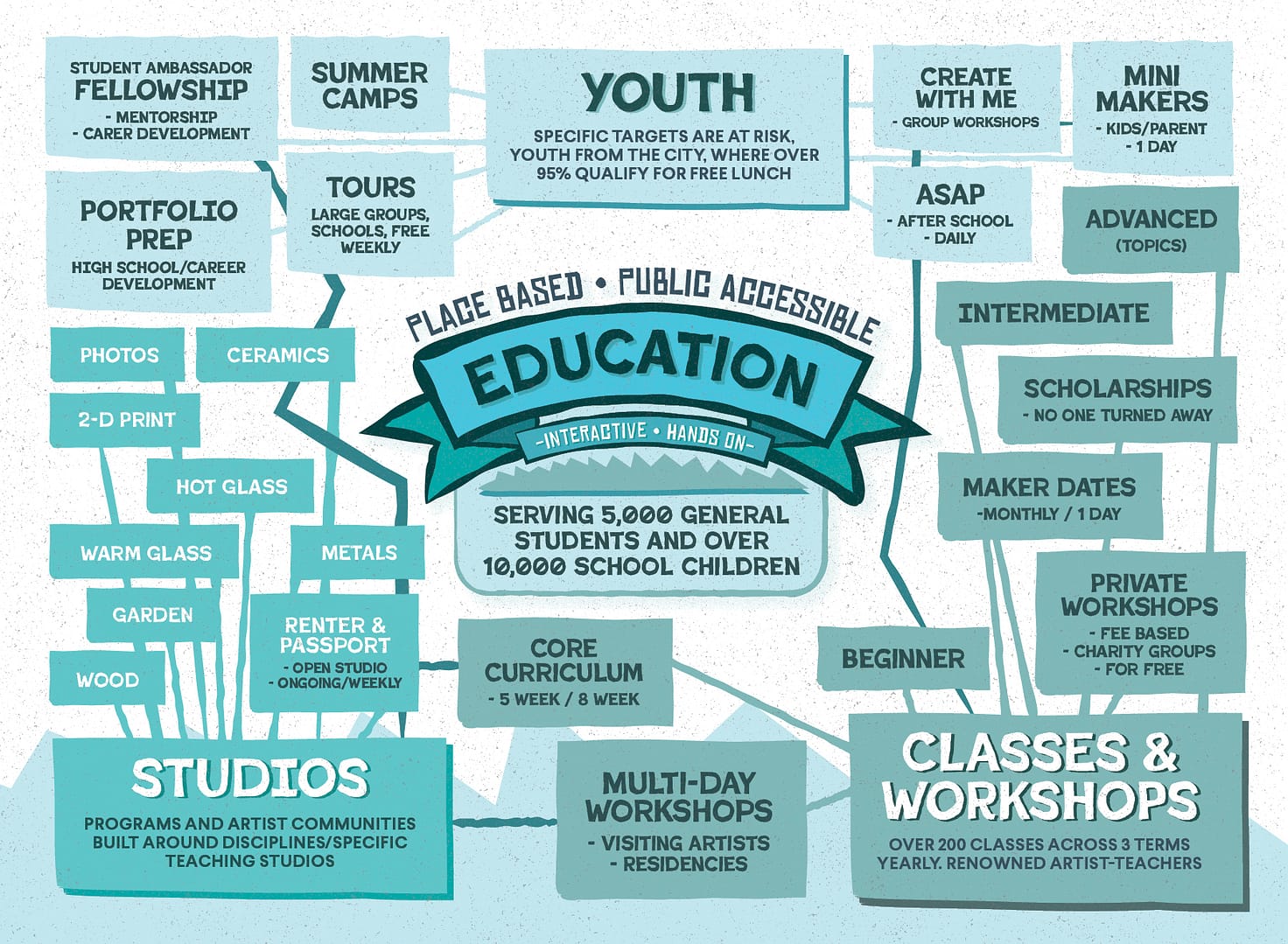
Classes, workshops, youth programs, field trips, and scholarships offered over three terms, serving over 5,000 all-ages students and 10,000 school children in cross-disciplinary studios and unique learning environments.
Outreach
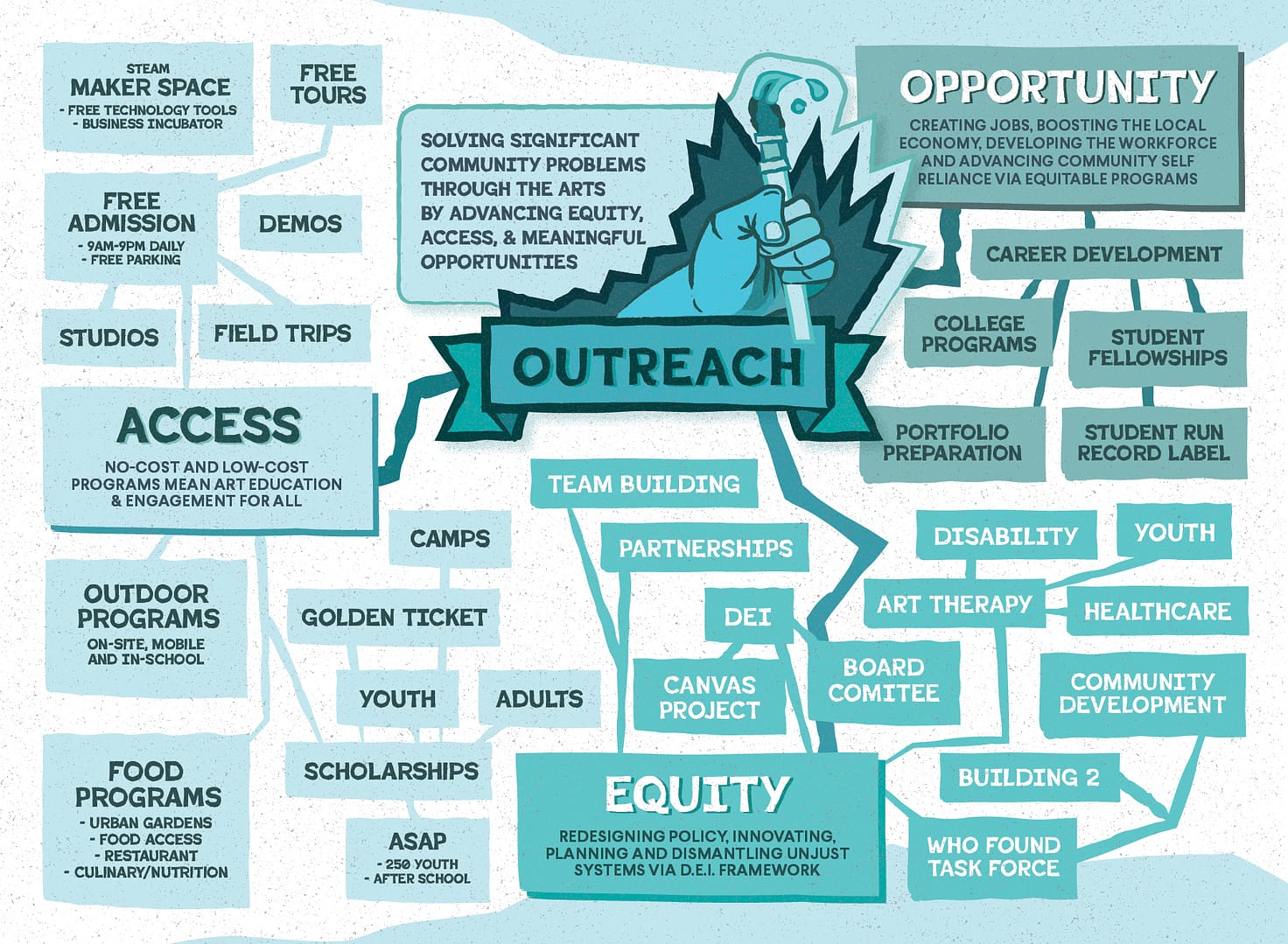
Using art, we try to address tangible community problems, serving more than 22,000 through afterschool programs, creative placemaking and outdoor events, and other equitable programs.
Artist + Workshop Development
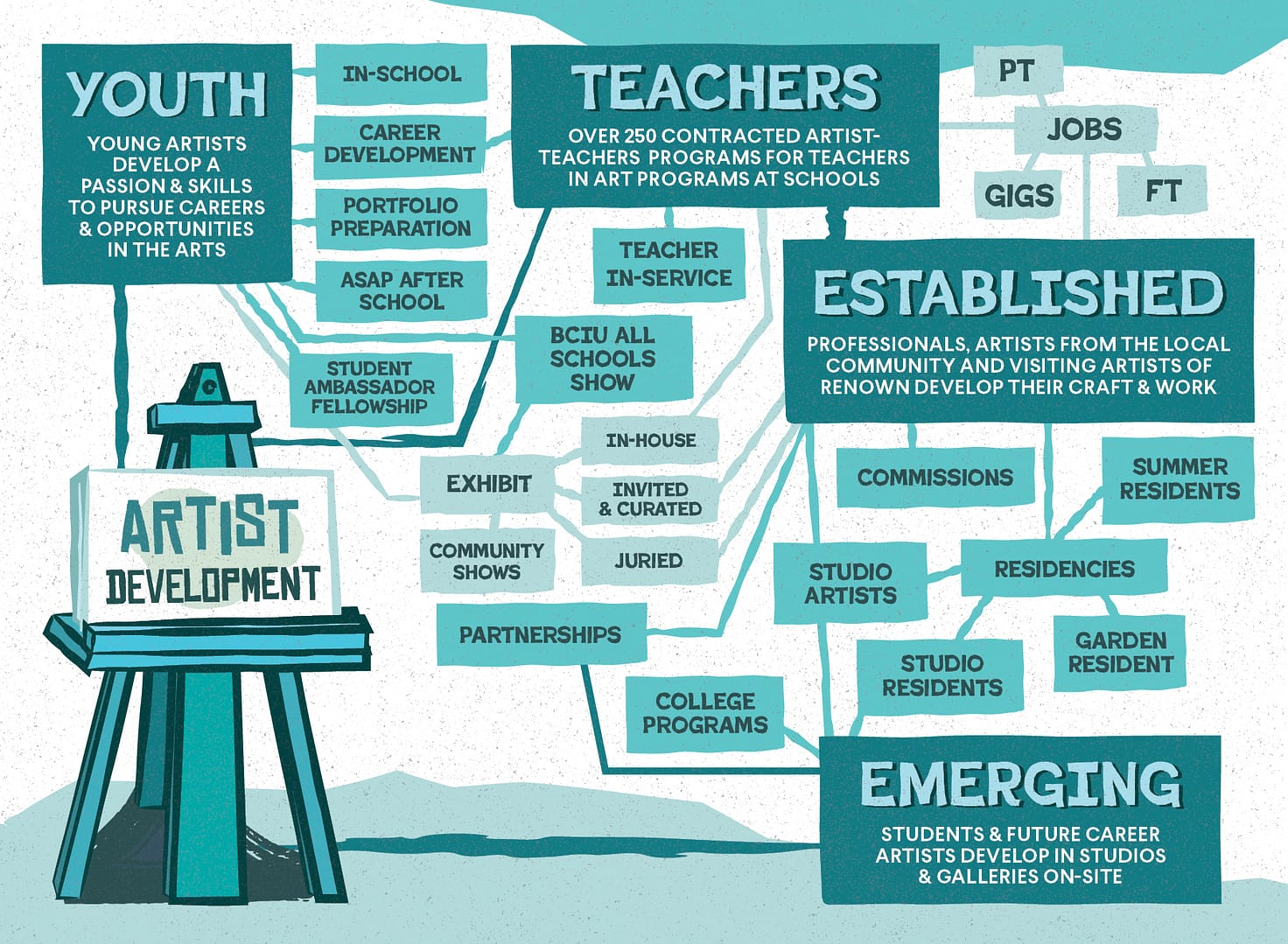
Through exhibitions, commissions, studio rentals, artwork & gallery sales, residencies, mentorships, portfolio prep, passport programs, and career opportunities, we serve over 500 established, emerging, and student artists annually as well as those looking to reenter the workforce with new skills.

Visitor Experiences
The art center serves over 250,000 total visitors on-site through interactive activities, tours, school groups, rentals, major events & conferences, community rentals, theater, the new store, and the art supply store. Outdoor experiences now serve more than 15,000 and we are opening a restaurant our new restaurant in 2025.